
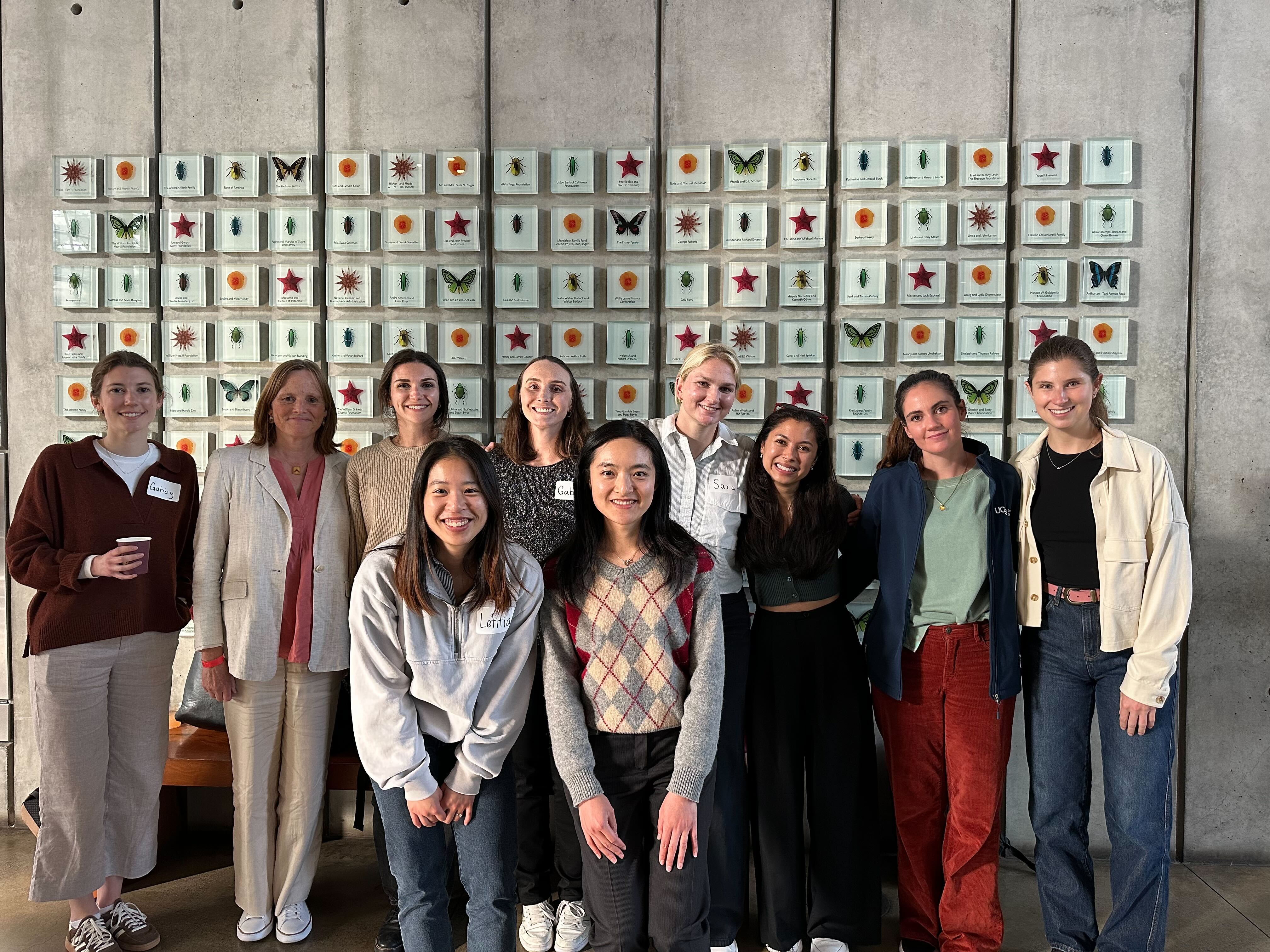
Mission Statement
Our goal is to address and remove the barriers and biases standing in the way of gender equity in Immunology. We recognize that intersectionality is vital for building an inclusive and empowering environment, which is why we are committed to centering the needs and voices of underrepresented genders in science. Over time, we believe our mission and values will create equal opportunity and representation across all academic levels in immunology research and science.
Leadership Committee
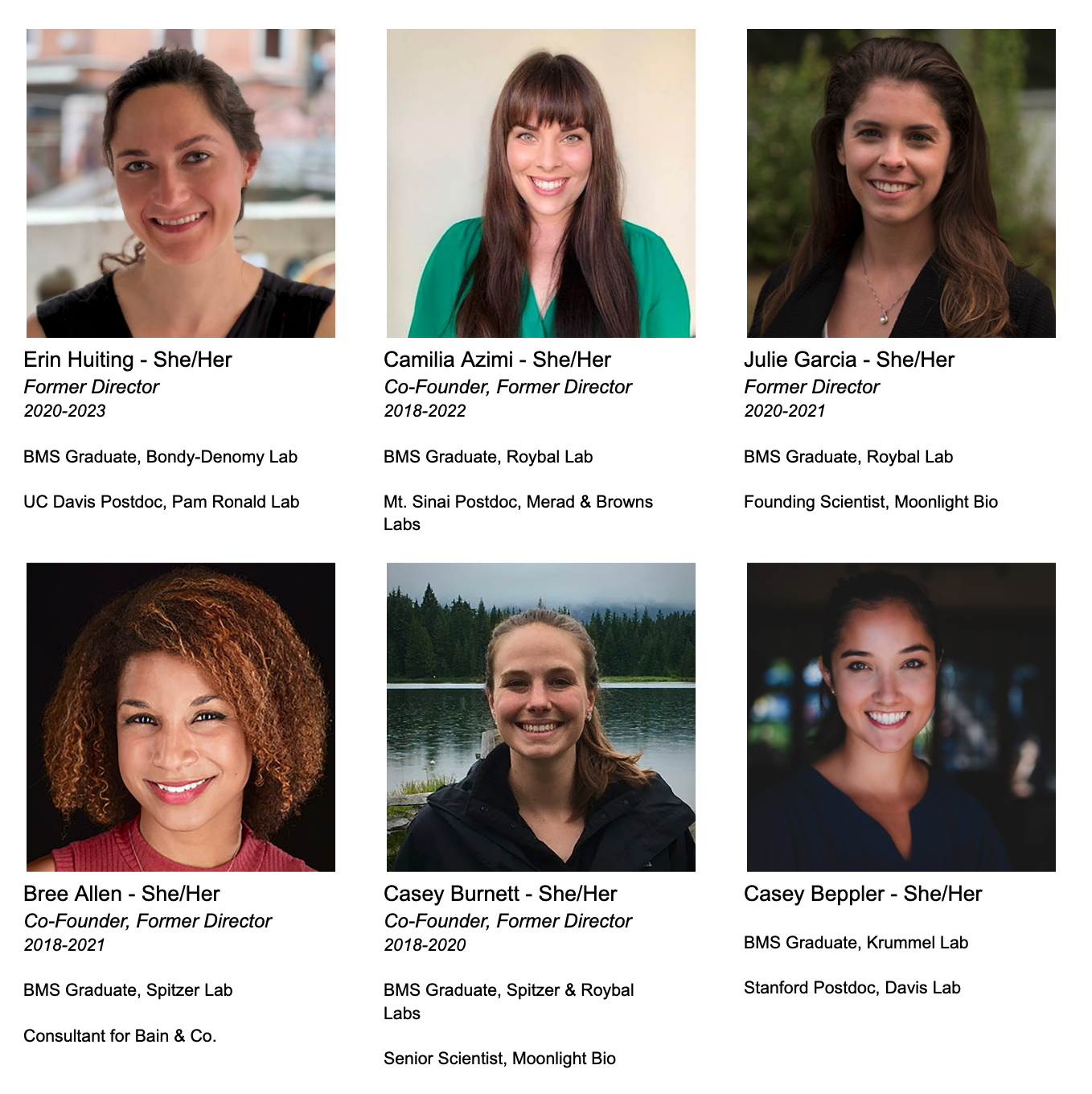
Directors
Lead the organization and planning of events supporting our key initiatives.

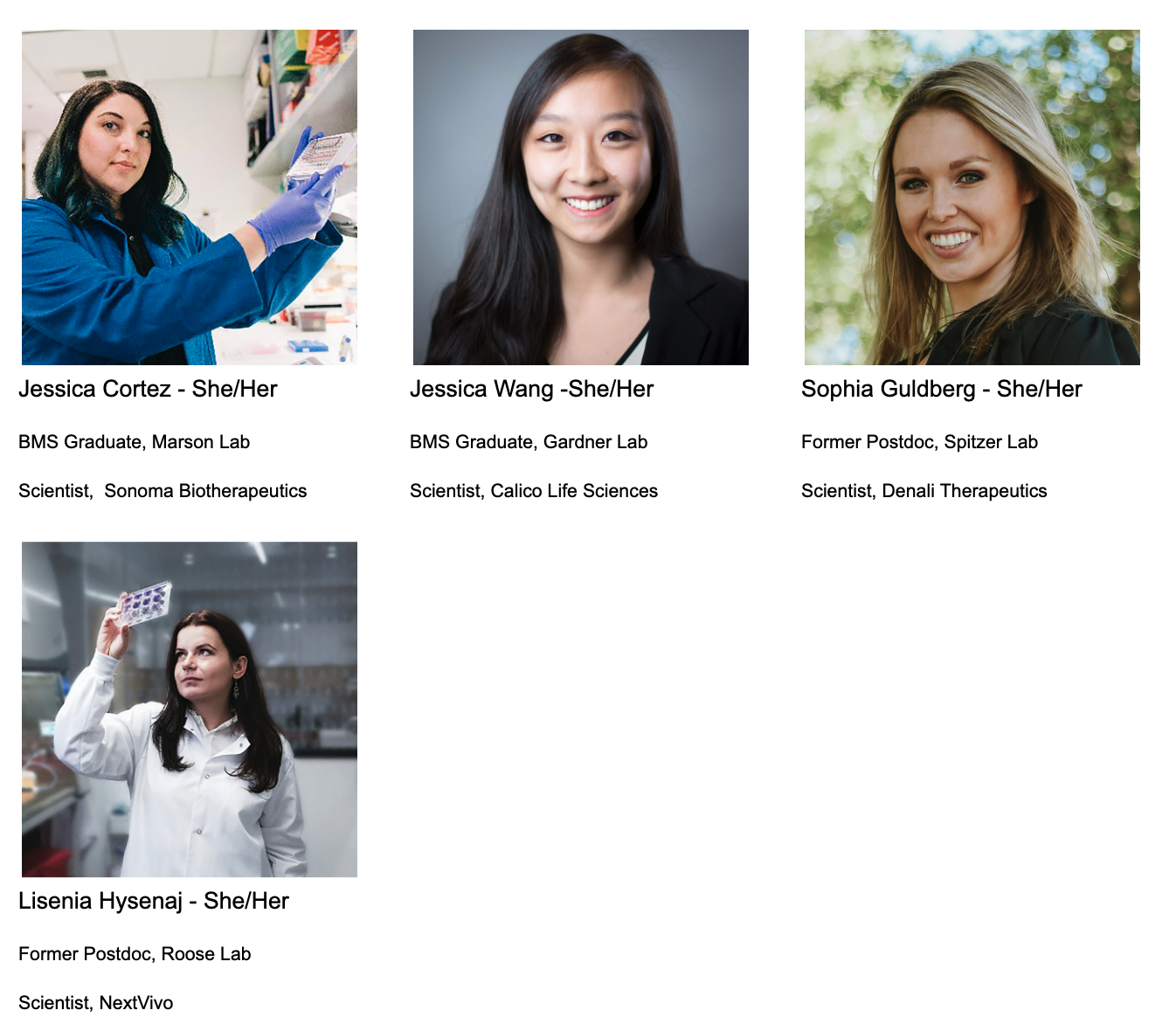
Active Members
Lead the organization and planning of events supporting our key initiatives.

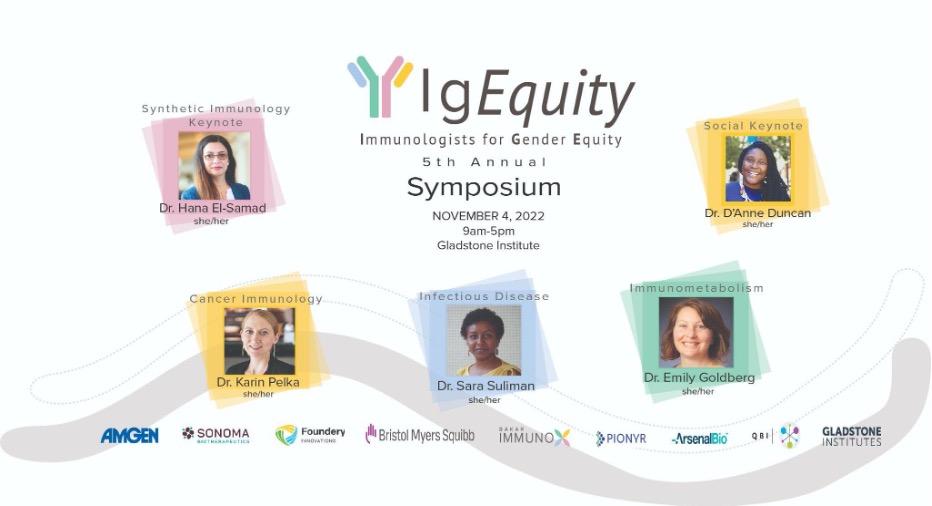
Alumni Leadership


Key Initiatives
Our Building Community initiatives develop communities that support, empower, and elevate voices of underrepresented genders in science while fostering connections between faculty, fellows, and trainees.
- Host the annual Gender Equity in Immunology Symposium, 2018 - present
- Host local social networking hours and luncheons, 2018 - present
- Assist with organizational support during BMS Graduate Program recruitment, 2019 - present
- Host a cross-institutional Gender Equity Leadership Training Retreat, future
ADVOCACY AND ACCOUNTABILITY
The Advocacy and Accountability initiatives advocate and hold ourselves accountable to supporting opportunities and policies that dismantle gender-based discrimination and biases.
- Evaluate IgEquity events to ensure representation of underrepresented genders and gender identities in science are given scientific and social platforms, 2018 - present
- Host Gender, Diversity, and Inclusion Strategy Sessions, 2019
- Work with ImmunoX to support a Maternity Support Grant to facilitate childcare and scientific pursuits, 2019 - present
- Work with other DEIJ organizations to provide support to the broader UCSF community, 2020 - present
- Work closely with the ImmunoDiverse organization to ensure we complement and support each other’s efforts within the UCSF ImmunoX community, 2020 - present
- Advocate for a full-time community program administrator who receives dedicated DEI training to relieve the administrative pressure on graduate students and postdocs to become experts within this area, 2020 - present
- Work with the UCSF LGBT+ Center to provide our trainee leadership members training on gender equity and identity, 2021
- Meet annually with the UCSF Gender Equity Task Force to better understand the resources and changes at the administration level, 2021
- Develop and sponsor Gender Equity Leadership Awards to recognize, reward, and compensate individuals who sustainability contribute their time to GE efforts, future
MENTORING AND OUTREACH
The Mentoring and Outreach initiatives connect IgEquity with local schools, organizations, and academic institutions across the Bay Area to provide mentoring and outreach for underrepresented genders in science that are interested in immunology research.
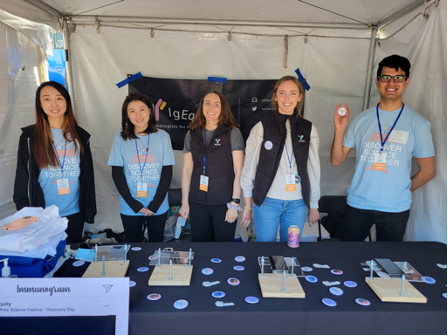
- Participate in local outreach efforts through the Bay Area Science Festival Discovery Day, 2019 - present
- Launch virtual IgEquity Mentorship Portal that proritizes support and resources for URM high school students, undergrads, and postgrads, 2020 - 2021
- Facilitate relationships between UCSF trainees and fellows through the online UCSF Connect community, 2020 - present
- Work with UCSF ImmunoX to create and promote videos of ‘Who are Immunologists’ Expand recruitment efforts for underrepresented genders and gender identities for the BMS Graduate Program, future
- Establish a ‘Pathway-to-Postdoc’ Award that supports scientists through the transition of pre- to postdoctoral research, future
- Coordinate quarterly UCSF-Biotech Networking Dinners to expand professional relationships between academia and industry, future
Getting Involved
IgEquity Community: Anyone with a vested interest in learning about, participating in, and/or supporting our initiatives, please sign up with our listserv to receive regular updates and invitations to our community meetings.
IgEquity Active Members: Members of our community who have taken on responsibilities of ideating, spearheading, and communicating initiatives. These members include postdocs, graduate students, technicians, and research associates. Members are expected to attend at least 50% of community and leadership meetings.
IgEquity Deputy Directors: Active members that have taken on a two year commitment as the leaders of IgEquity. The first year of this commitment requires shadowing current Directors, the second year of this commitment requires taking on a full directorship role.
IgEquity Directors: IgEquity Directors commit to one year of executive leadership, directing the vision, mission and overall initiatives of IgEquity. Directors additionally commit to training a class of new deputy directors. Active members can become Directors after completing one year as a Deputy Director.
IgEquity Faculty Leadership Team: ImmunoX and other UCSF Faculty that commit to providing one or more years of advising to the IgEquity leadership team. Faculty leaders meet with the Directors and Deputy Directors twice a year to provide direction, counseling, and support to IgEquity Initiatives.
Please email us at igequity@ucsf.edu if you want to learn more, or sign up for our listserv here.
Are you part of a biotech industry within the Bay Area? Are you interested in advancing gender equity within science? Would you or your company like to support or be involved in IgEquity initiatives? We would love to partner with you! Please reach out to igequity@ucsf.edu to get in touch with one of our directors.
Gender Equity in Immunology Symposium
Event Summary:
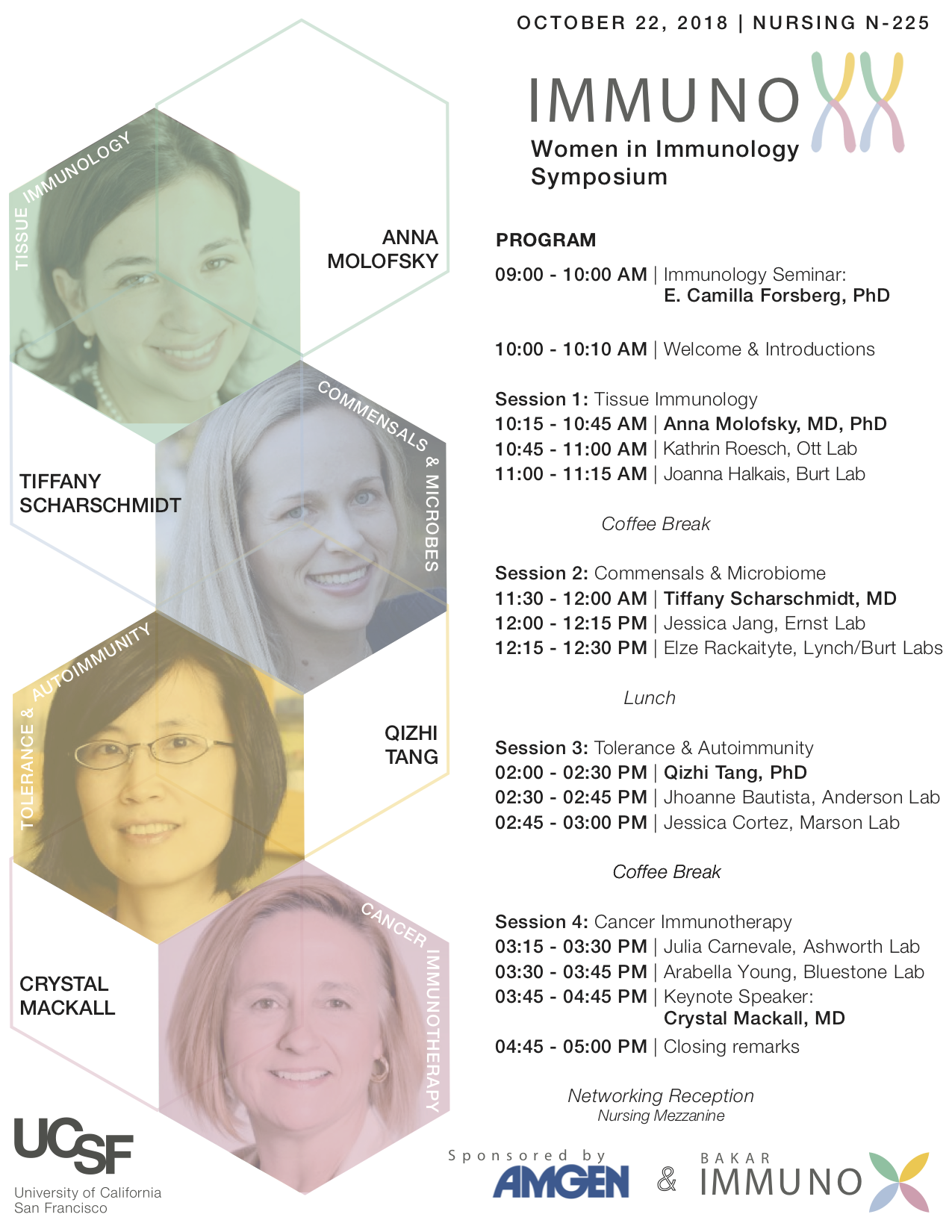
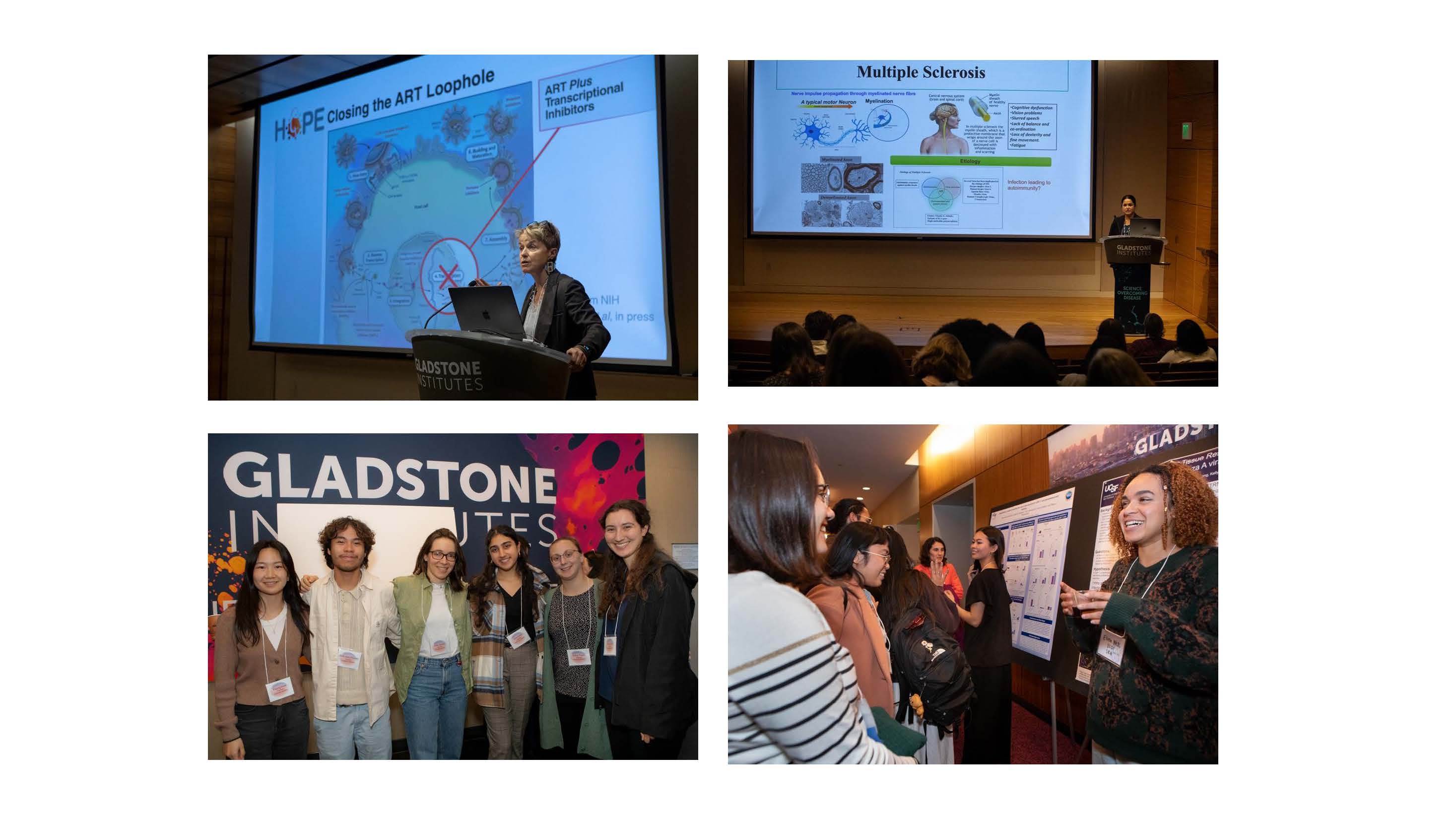
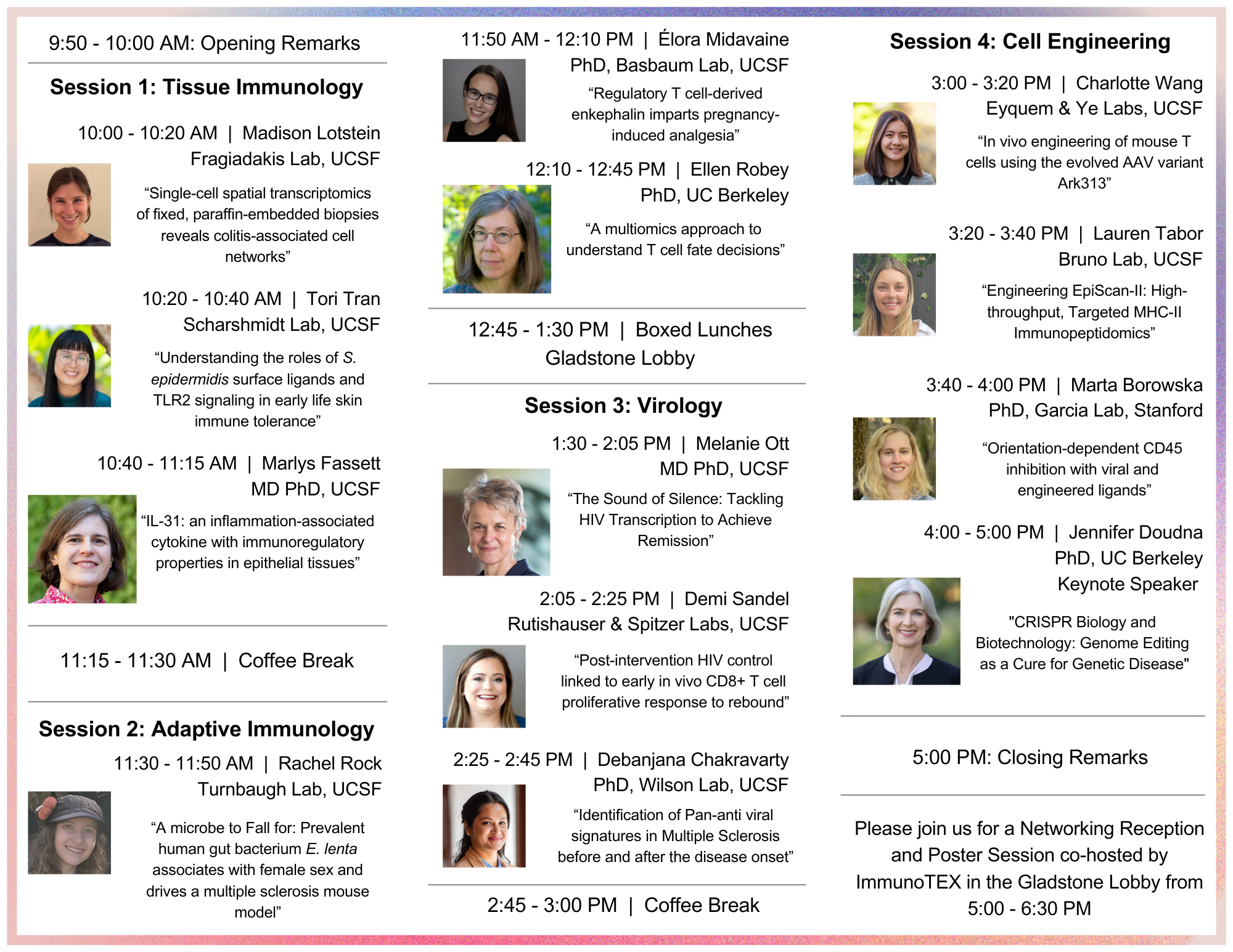
The Gender Equity in Immunology Symposium was founded in 2018 to highlight exceptional scientists who may identify as gender minorities within the UCSF Immunology Program. We designed the symposium to incorporate research talks from established faculty and trainees who are earlier in their career to demonstrate the diversity of labs and research at UCSF. Now as a yearly forum, the symposium additionally provides a scientific platform for discussions on gender disparities in and beyond our community.
The symposium includes various anchor speakers from UCSF as well as an external keynote speaker. These talks spotlight the latest research of junior or senior scientists across institutions and includes discussion about their professional growth through a personal lens. In 2022, we implemented a social keynote speaker as a direct jumping point for open dialogue and discussion about gender inequities in science. To broaden the reach of this event, we’ve utilized the hybrid in-person/virtual event structure to extend our invitation to people from nearby universities and the international science community. In 2023, we are excited to partner with Women in Life Sciences, a trainee-led organization at UCSF with shared initiatives, to involve the broader life science community through the intersection of immunology with other fields.
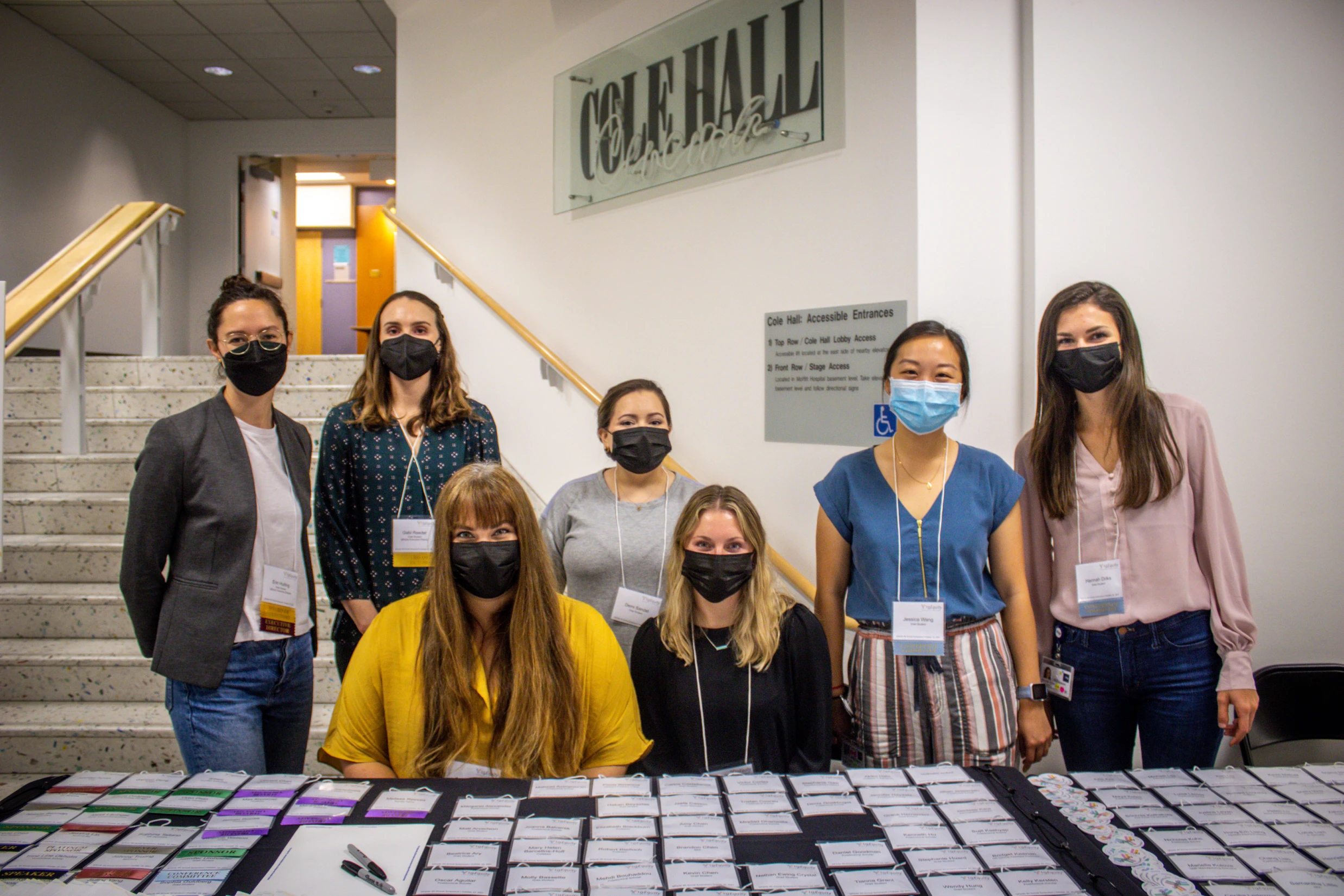
Since building new relationships is a key element to our annual symposium, our academic sessions are followed-up by a social networking event where scientists from all career levels are invited to connect and collaborate amongst themselves and our academic and industry partners. In 2022, we had an overwhelmingly positive response with over 300 attendees from around the world, three UCSF partners (Bakar ImmunoX, Gladstone Institute, and Quantitative Biosciences Institute) and numerous industry partners (Amgen, Bristol Myers Squibb, Sonoma Biotherapeutics, Foundery Innovations, Pionyr, and Arsenal Bio). We aim to host this inaugural symposium each year to continue celebrating the research and identities of the next generation of immunologists.
.webp)
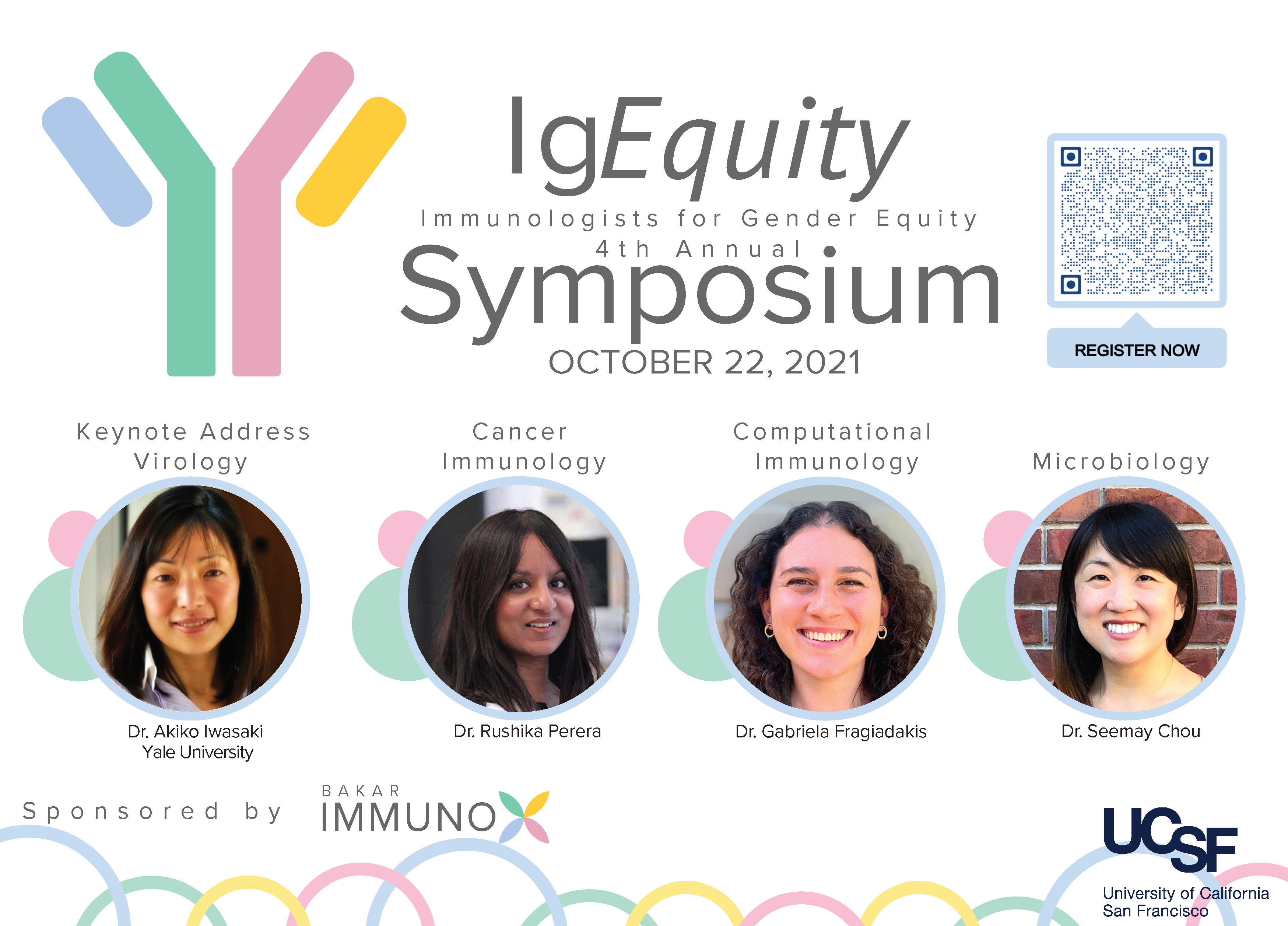
Please join us for our 2023 Gender Equity in Immunology Symposium on Friday, November 17th at the Gladstone Institute on the UCSF Mission Bay Campus. This year, we are partnering with Women in Life Sciences (WiLS) to highlight the research of gender minorities at the intersection of scientific fields. Check back in the coming weeks for more details regarding section topics, speakers, and how to RSVP.

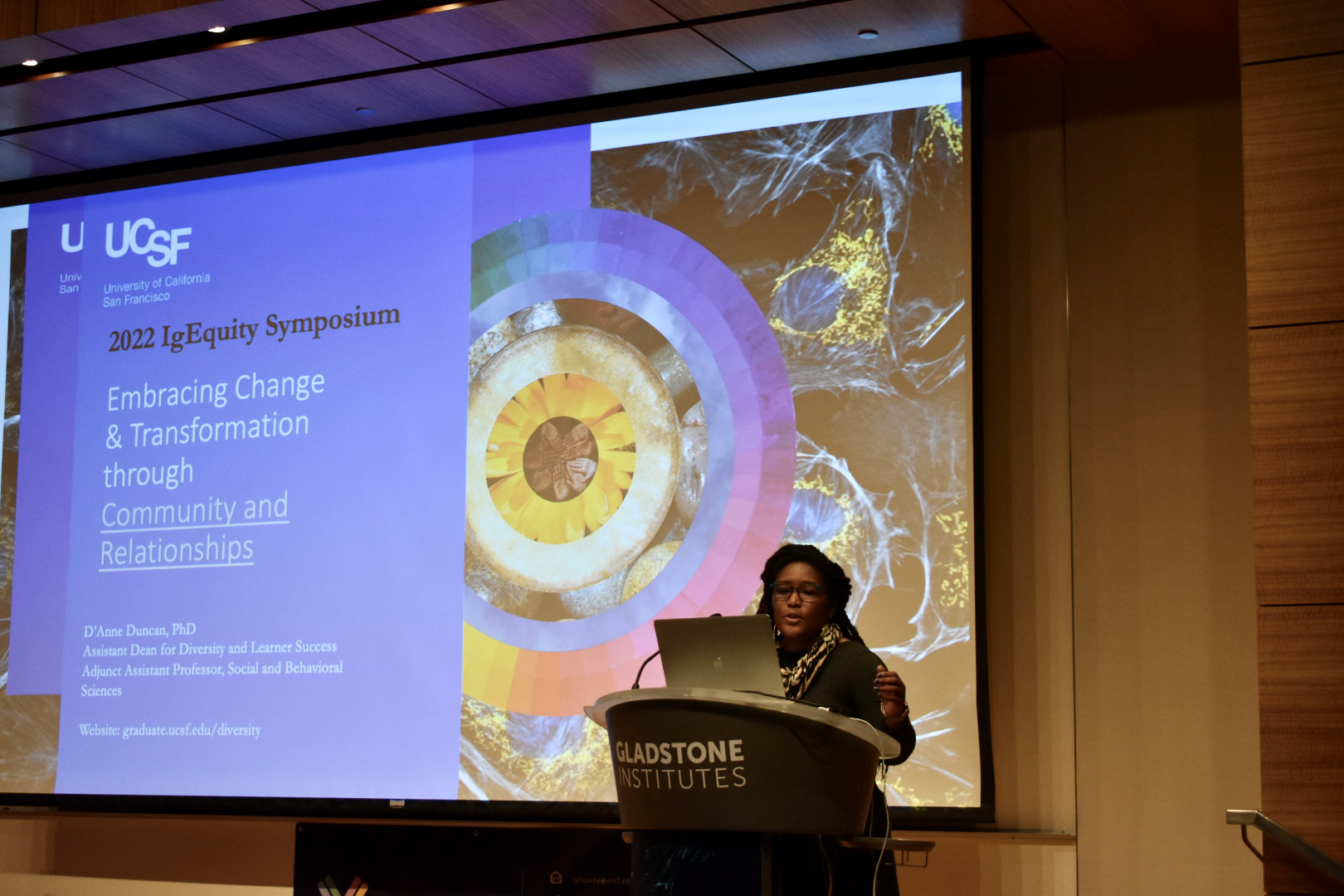
Previous Symposiums:


Interested in getting involved in organizing the event? We are always looking to expand the leadership team to help organize the symposium and future events. Email us at igequity@ucsf.edu.Want to become an industry partner? Contact us to see how your company can get involved in supporting the symposium and future events.
Events
- IgEquity Leadership Retreat - Winter 2025
An event new to the organization will focus on career development and building community within our leadership team.
- Gender Equity in Immunology Symposium - Thursday, November 14, 2024
Location: Gladstone Institutes, Mahley Auditorium

- Gender Equity in Immunology Symposium - Friday, November 17, 2023
Gladstone Institutes, Mahley Auditorium
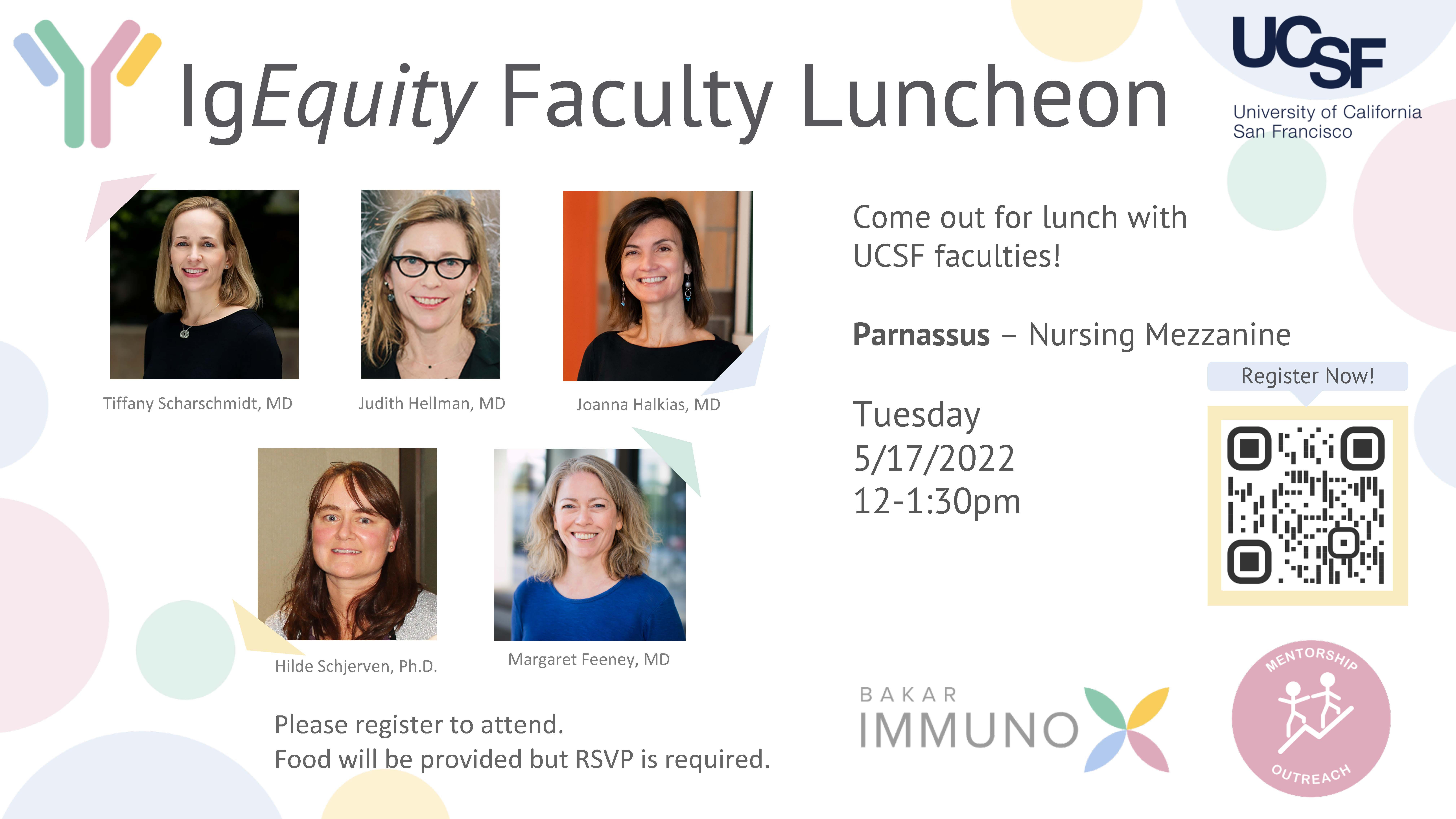
Please join us for our 6th annual 2023 Gender Equity in Immunology Symposium. This year, we are partnering with Women in Life Sciences (WiLS) to highlight the research of gender minorities at the intersection of scientific fields. - IgEquity Fall Luncheon - Tuesday, October 10, 2023
UCSF Parnassus Campus, Nursing Mezzanine
IgEquity invites you to join us for a social networking luncheon at the Parnassus campus, where trainees will have the opportunity to eat lunch with faculty members and discuss their work in immunology as well as their professional journeys in science. Through these luncheons, we hope to create a safe space to foster meaningful conversation and relationships. - Bay Area Science Festival Discovery Day - November 2019 & March 2022
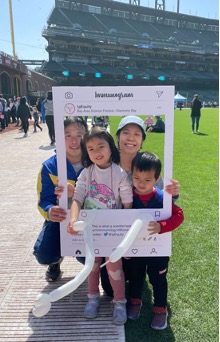
Event Details: Check out our smartphone microscopes, dress up like a scientist, and have your picture taken with some of our very own IgEquity leadership team scientists. Join us as we show students of all ages realize what a scientist looks like!


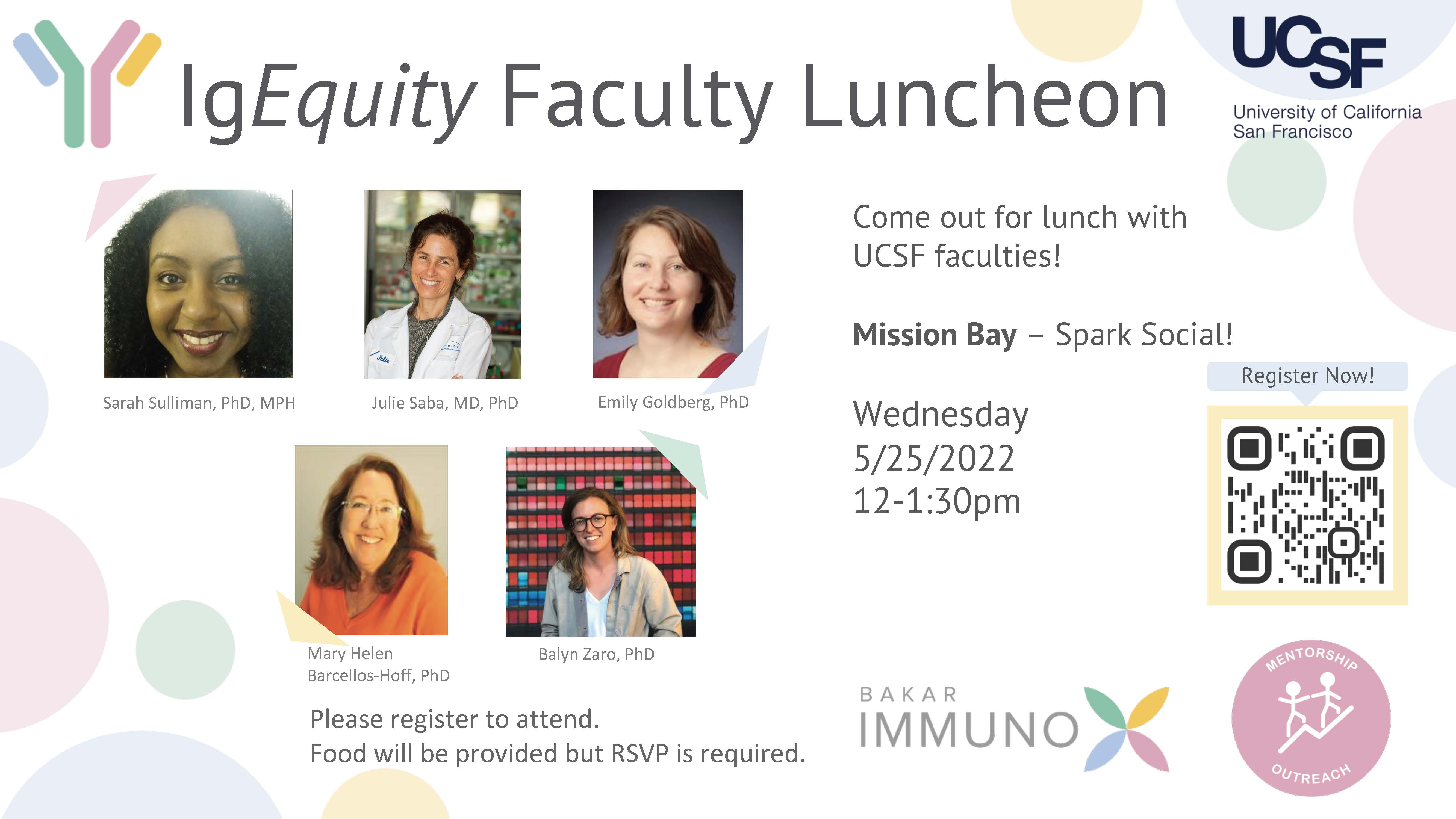
- IgEquity Spring Luncheon - May 2022
Event Details: Our social networking luncheon offers trainees the opportunity to eat lunch with faculty members and discuss their work and professional journeys in science.


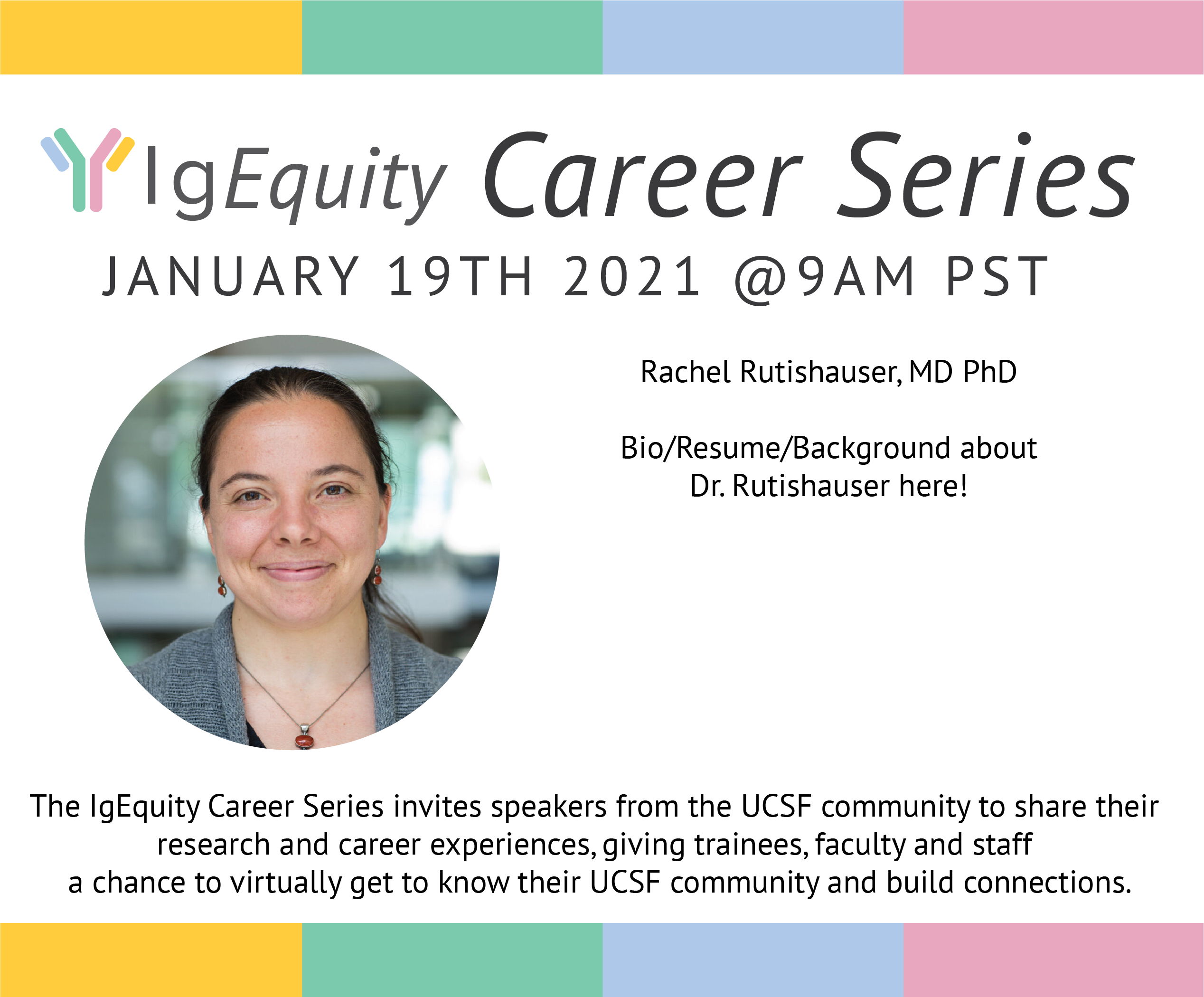
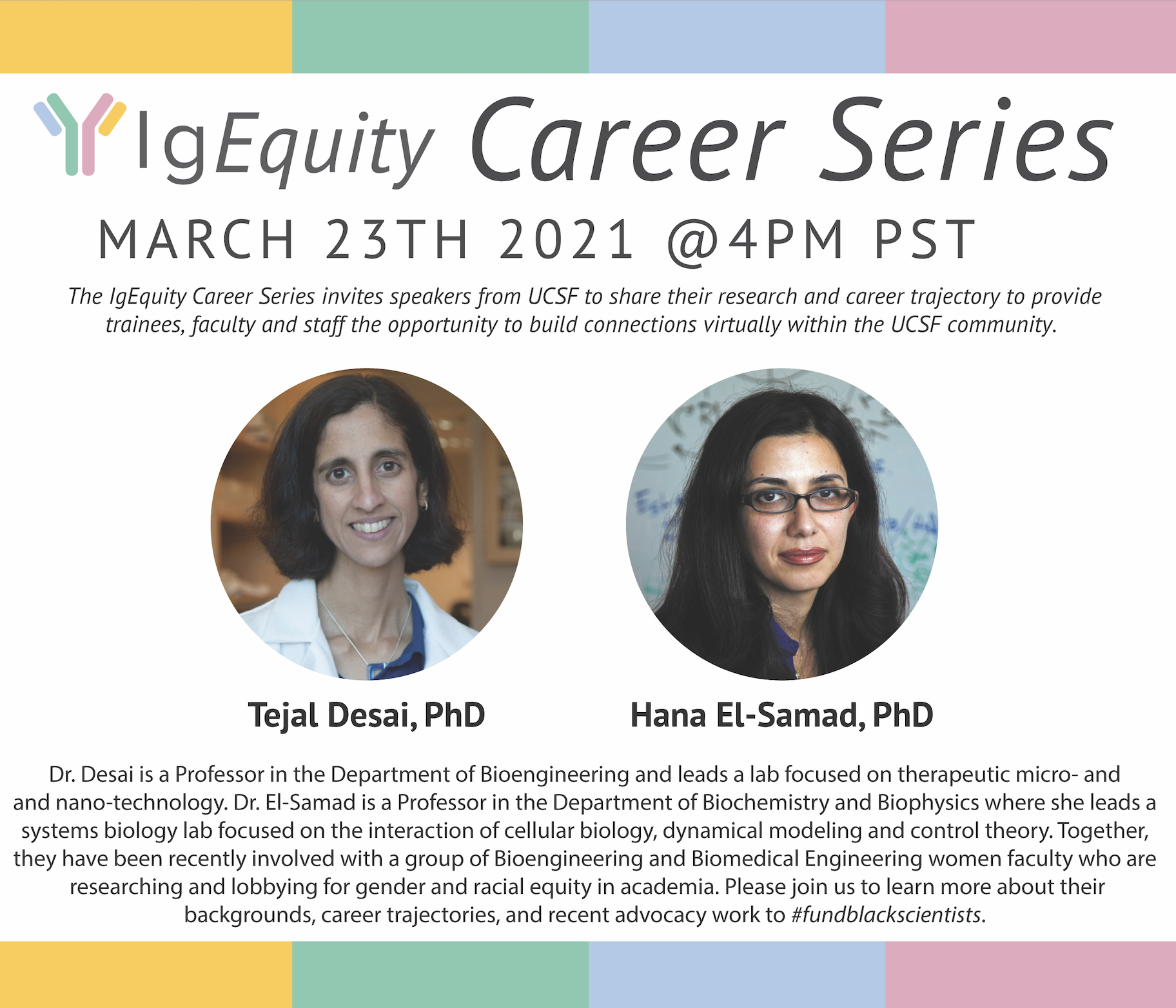
- IgEquity Career Series - January and March 2021
Event Details: The IgEquity Career Series celebrates underrepresented genders in research at UCSF through learning about their professional and personal journeys in science.


- COVID-19 Virtual Symposium - June 4th, 2020, 2-4pm PST
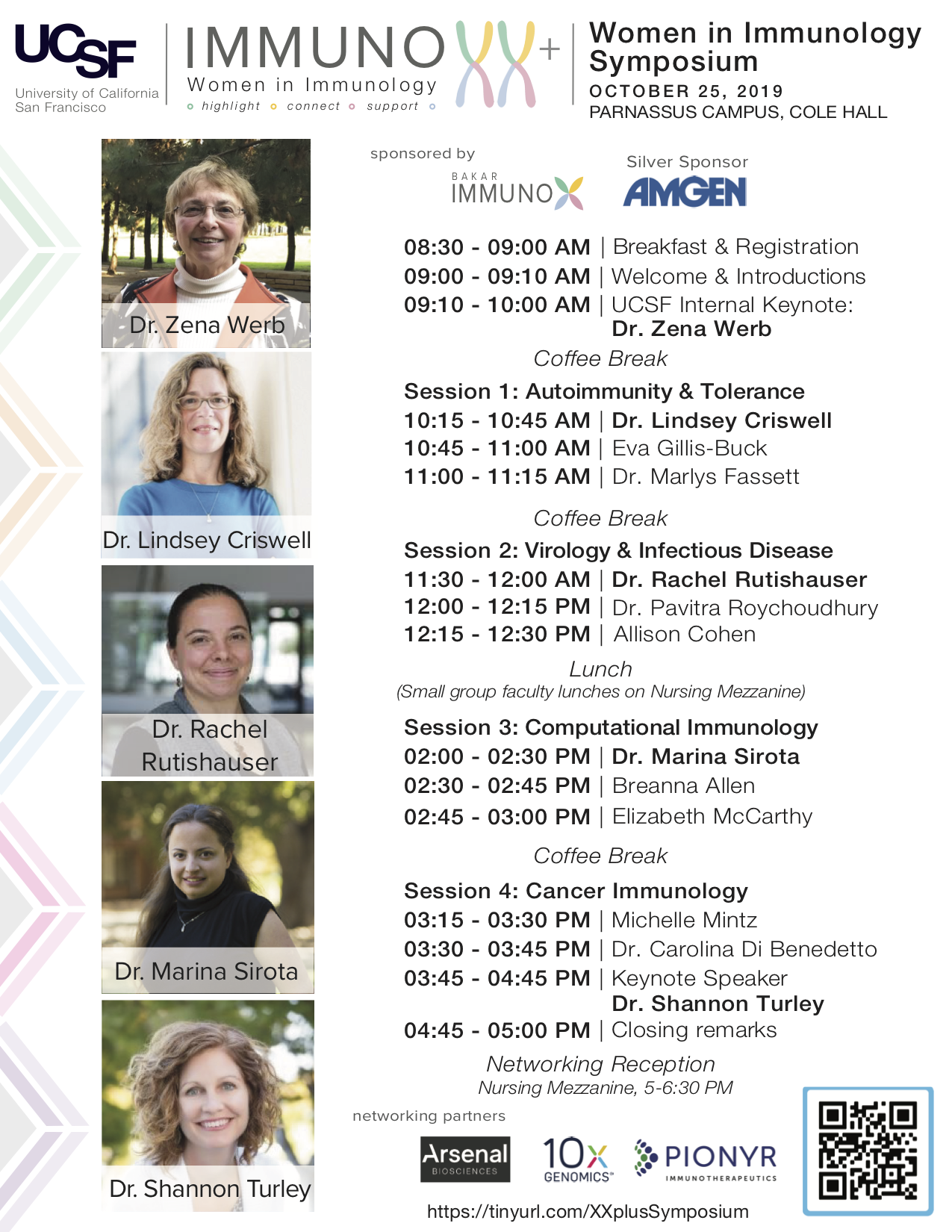
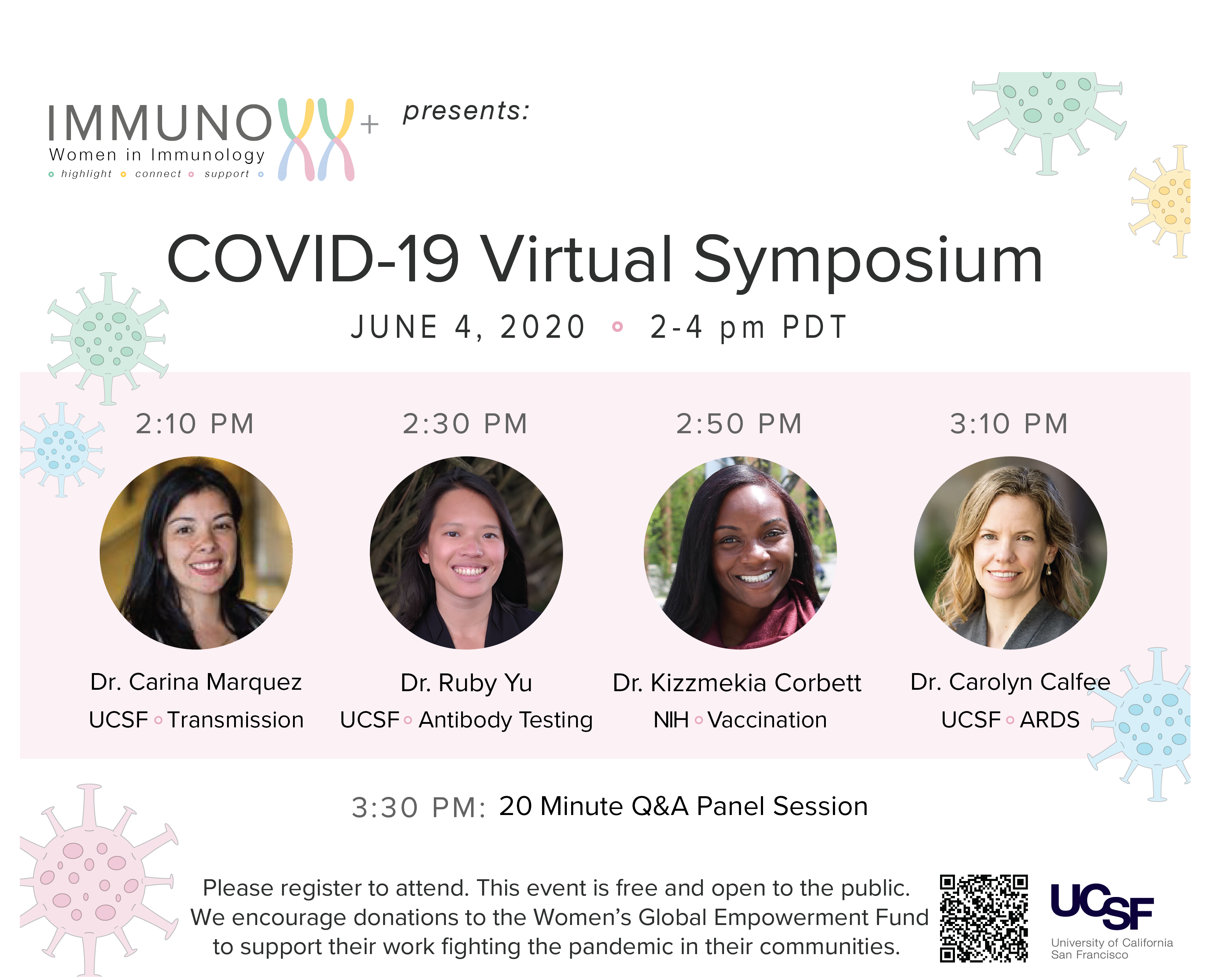
Event Details: Guided by our mission to highlight, connect and support female scientists, ImmunoXX+ is hosting a COVID-19 Mini Symposium to showcase the current COVID-19 research efforts of 4 incredible female scientists. We will hear presentations from Drs. Carina Marquez, Ruby Yu, Kizzmekia Corbett, and Carolyn Calfee about topics ranging from viral transmission to the current state of antibody testing. The symposium will conclude with a 20-minute Q&A session. Throughout this event we are encouraging participants to donate to our sponsored partner, the Woman’s Global Empowerment Fund, who is working to prepare and equip local communities in Uganda to fight the COVID-19 pandemic.
Donate to the Woman’s Global Empowerment Fund: https://wgefund.org/
Couldn't attend? Click here for the recording of this event.

- How to Network with UCSF Connect - May 26, 2020
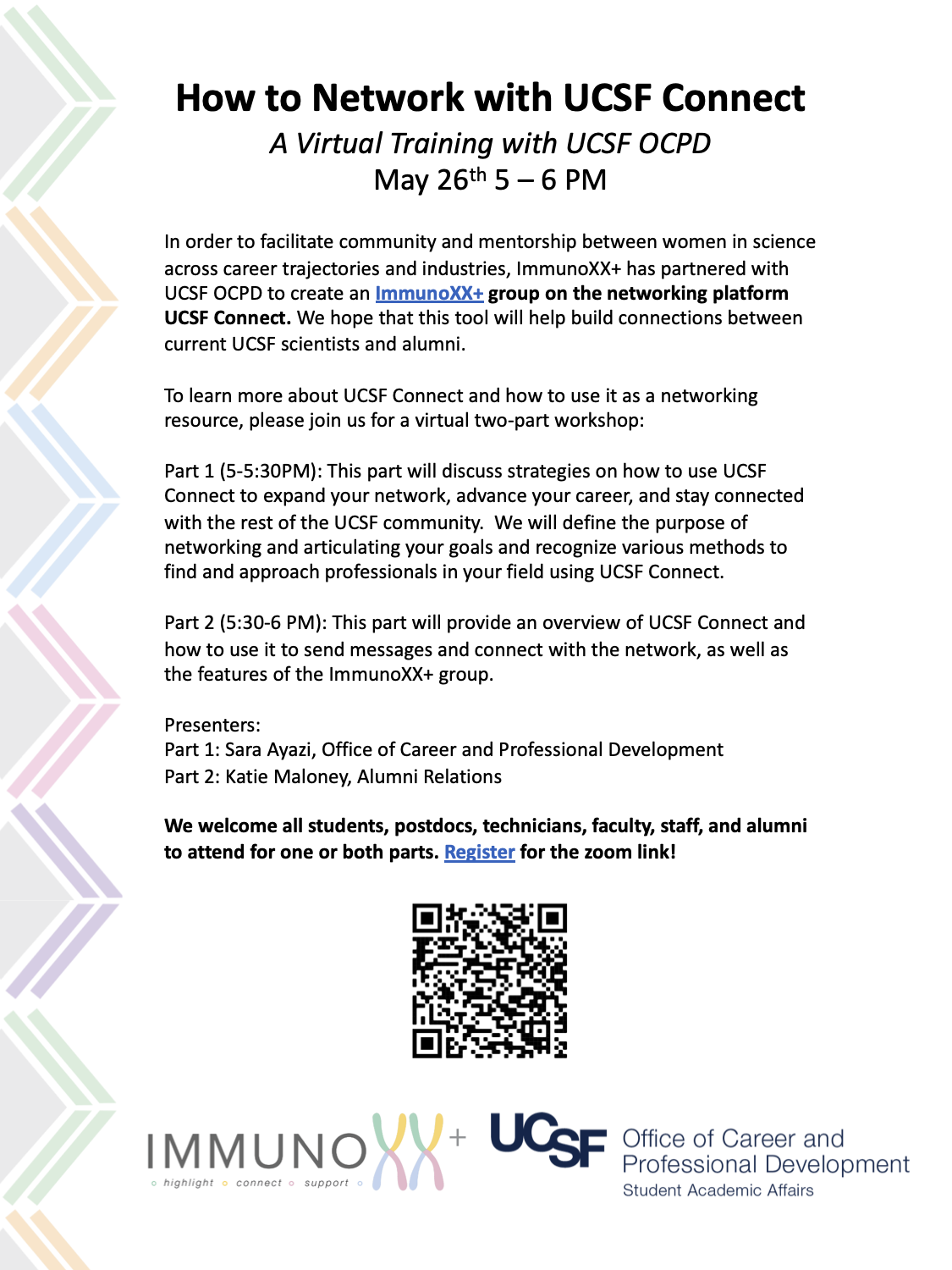
Event Details: To facilitate community and mentorship between women in science across career trajectories and industries, ImmunoXX+ has partnered with UCSF OCPD to create an ImmunoXX+ group on the networking platform UCSF Connect. We hope that this tool will help build connections between current UCSF scientists and alumni. During this two-part workshop, we will be going over the UCSF Connect platform, features of the ImmunoXX+ group, and strategies on how to best use UCSF Connect to expand your network. Join us for one or both parts of the session.
Schedule:
5-5:30pm Sara Ayazi, Office of Career and Professional Development: This part will discuss strategies on how to use UCSF Connect to expand your network, advance your career, and stay connected with the rest of the UCSF community. We will define the purpose of networking and articulating your goals and recognize various methods to find and approach professionals in your field using UCSF Connect.
5:30-6pm Katie Maloney, Alumni Relations: This part will provide an overview of UCSF Connect and how to use it to send messages and connect with the network, as well as the features of the ImmunoXX+ group.

- Gender, Diversity and Inclusion Strategy Meeting - December 11, 2019
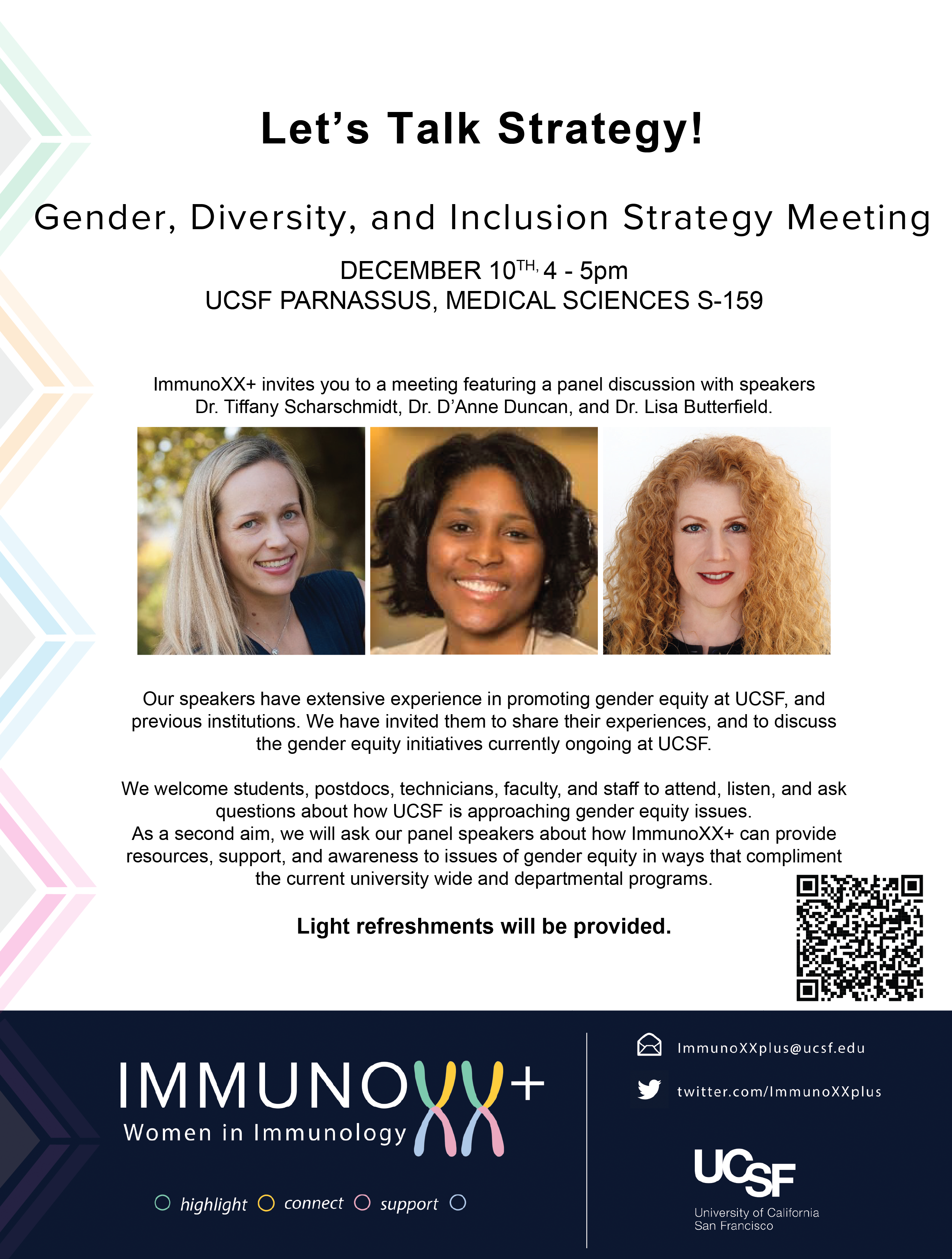
Event Details: ImmunoXX+ presents a Gender, Diversity and Inclusion strategy meeting featuring guest speakers Dr. Tiffany Scharschmidt, Dr. D'Anne Duncan, and Dr. Lisa Butterfield. Our speakers have extensive experience in promoting gender equity at UCSF, and previous institutions. We have invited them to share their experiences, and to discuss the gender equity initiatives currently ongoing at UCSF. We welcome students, postdocs, technicians, faculty, and staff to attend, listen and ask questions about how UCSF is approaching gender equity issues. As a second aim, we will ask our pane speakers about how ImmunoXX+ can provide resources, support, and awareness t issues of gender equity in ways that complement the current university wide and departmental programs.
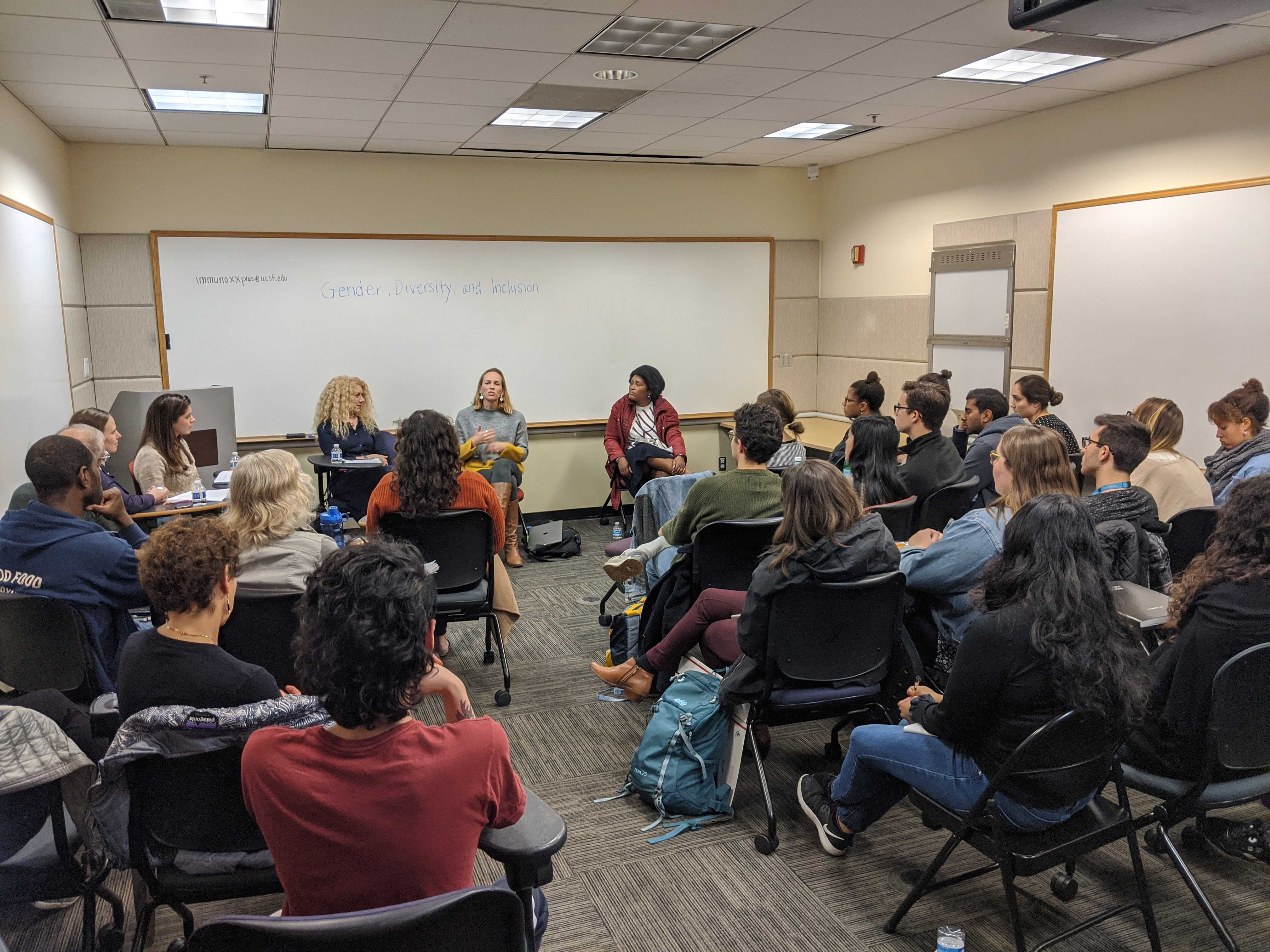
Outcome/Meeting Note: Thank you to everyone that came to our Gender, Diversity, and Inclusion Strategy meeting! ImmunoXX+ leadership members Casey Burnett and Julie Garcia led us through a discussion with our panel, and subsequent discussion with our attendees.
Dr. Butterfield spoke about her time leading a Women's Task Force at Pitt. This task force employed a data-driven approach to bring transparency to salaries, grant awards, speaker invitations, and more. This data motivated the University of Pittsburgh to implement policies to ensure equity in hiring and salary decisions, as well as improving policies that affect the day-to-day work environment for faculty.
Dr. Tiffany Scharschmidt, a member of ImmunoX leadership, discussed initiatives aimed at both increasing gender and under-represented minority diversity within the ImmunoX program. Some initiatives include parental support programs, community building events and equity in scientific studies.
Dr. D'Anne Duncan spoke about initiatives to increase diversity at a university wide level and encouraged recruiting programs to attend conferences hosted by organizations such as Sacnas and ABRCMS to reach under-represented minorities. Additionally, D'Anne spoke about the diversity statement requirements for faculty applicants at UCSF. D'Anne also discussed programs to support and build community, such as the IMSD and Path to Postdoc programs.


News
Organizational Update - June 2020
Our organization began three years ago when our founders, during their first year as graduate students at UCSF, acknowledged that there were very few women in leadership and mentoring positions within the Immunology Department at UCSF. While the number of women in science bachelors and PhD programs has increased over the years, this increase in representation at early levels of training has not translated to an increase in representation at the higher levels of scientific careers and advancements. Our founders thus created ImmunoXX+, a student-led organization that recognized disparities in gender representation across academia, and aimed t provide programming, peer and career networks, as well as financial resources to help highlight, connect, and support successful female immunologists.
In the wake of the murders of George Floyd, Breonna Taylor, and countless other Black people, our country is grappling with its complicity in systemic racism. The re-emergence of the Black Lives Matter Movement in the national spotlight has stirred many of us to action, while also causing us to acknowledge our past of silence and complicity. As an organization, we recognized the need to step back, and critically assess whether our organization and mission is fully serving our community to dismantle systems of racial and gender-based discrimination. We are excited to stand alongside the newly formed Diversity, Equity and Inclusion advocacy group ImmunoDiverse, which seeks to create an anti-racist and welcoming environment for people from underrepresented minorities (URM) recognizing that these barriers primarily disenfranchises individual of Black, LatinX and Native American descent.
We have also acknowledged that our previous mission and actions – to highlight, connect, and support women in Immunology – lacked the intersectionality and inclusion necessary to create gender equity within our department and throughout professional science careers. Importantly, our organization's previous name, ImmunoXX+, was exclusionary and not representative of our support for the many trans and non-binary individuals who face gender discrimination every day. It is for this reason that we have adopted a new name, IgEquity – Immunologists for Gender Equity – and a revitalized mission statement.
We are pleased to be part of ImmunoSpectrum, the new umbrella program within ImmunoX that will provide support for both ImmunoDiverse and IgEquity. We look forward to working alongside ImmunoDiverse to support their mission and programs as we collectively seek racial and gender equity in science.
Pledge of Support
In 2020, many of our colleagues at UCSF have written open letters and calls to action addressing the issues of systemic racism present within the UCSF community. The members of IgEquity fully support these calls to action, and the demands outlined in these letters linked here: Graduate Student Petition, Humans of UCSF Petition
We are encouraged by the response of the UCSF administration to these calls to action but acknowledged that continued support and demands for change are required. See the full response to these letters here: https://graduate.ucsf.edu/petition-response
International Women's Day - March 2022
March 8th is International Women’s Day, an important day to celebrate women's achievements and to advocate for equity and equality in all spheres of our lives. This year the theme for International Woman’s Day is “Women in leadership: Achieving an equal future in a COVID-19 world."
This pandemic has highlighted both the centrality of women’s contributions and the obstacles that women encounter. Here we present portrait of three women in Immunology that were at the front of the ImmunoX COVID-19 research response. These researchers were mobilized at the beginning of the pandemic, becoming involved with two collaborative ImmunoX scientific projects that sought to understand and find cures for COVID-19 disease.


- Lauren, can you tell us about yourself and your role within ImmunoX?
I am a Biosafety Level 3 (BSL-3) specialist and I manage the CoLabs-supported BSL-3 facility at Parnassus. This lab is where we can handle aerosol pathogens, such as SARS-CoV-2. I collaborate with labs on their COVID-19-related projects and execute the experiments requiring the live virus. - Lauren, as a BSL-3 specialist in ImmunoX I guess you have worked very hard in 2020. What are some reflections you have about this past year?
How has the pandemic affected you both professionally and personally?The last year has gone by very fast for me. There has been so much work to do which was been both exciting and tiring. I spent the entirety of my graduate career working in a BSL-3 facility so it has been really rewarding to be able to put those skills to good use. I think the biggest impact this work has had on my personal life is that it needs to be a conscious decision for me to disconnect when I get home. Pre-pandemic I had a very full social life so now it’s easy for me to work all the time because I can’t have that social life right now. I realize that I cannot maintain this intense working lifestyle forever so I’m getting better at letting my brain take a break when I get home. - Have you experienced barriers or challenges as a woman in science?
How have you overcome those challenges?I have felt barriers for being a Mexican American woman scientist. Many times, I would second guess myself and think maybe I was just checking off a diversity box. Unfortunately, that little voice doubting myself is still in the back of my head sometimes but now I override that doubt by acknowledging my hard work that has put me in my current position. - What is one message you would like to share with women scientists?
One thing that I have been trying to get better at is avoiding saying things are ok when they are not. I notice that I do it to avoid an uncomfortable situation but it doesn’t solve anything. For example, when people assume I am not a PhD-level scientist because my arms are covered in tattoos, that is an outdated assumption and I should let them know instead of just saying “oh it’s ok”. My message to other women in science is that it is ok to acknowledge when someone has said something hurtful.

- Michelle, can you tell us about yourself and your role within ImmunoX?
I am the middle child of an African American mother and a Nigerian father and I grew up in Riverside, CA. I received my Bachelor’s degree from UC Berkeley in Integrative Biology and my Master’s degree from SFSU in MCB. My earliest science interests centered on human anatomy and physiology. As a young child when asked what I wanted to do when I grow up. My response was ‘I want to cure cancer.’ Looking closely at the body’s structures and being able to perform dissections in high school biology helped me hone my early interest for science. That interest was transformed while doing an internship after my undergraduate studies in Dr. Mina Bissell’s lab at LBNL, where I took part in a project involving how the tissue microenvironment impacts mammary gland development.
Today I am the lead of the Organoid D2B core where I develop 3D cell culture to broadly study cellular interactions and cell signaling pathways that govern cancer progression and drug responses. Another goal of the Organoid D2B Core is to build a living organoid biobank to serve as a platform for collaborative research at UCSF. A lot of the early work that I have done has centered on maintaining the stem cell niche in these organoid cultures by modulating growth factors and ECM stiffness allowing for unlimited passaging of the 3D cultures in our biobank. - 2020 has been a difficult year for many of us, what are some reflections you have about this past year? How has the pandemic affected you both professionally and personally?
The last year has definitely been difficult because there were so many uncertainties. However, I consider myself to be fortunate as we were considered essential workers and I didn’t suffer any financial burdens. I was able to come in to work and continue to process samples that added to our biobank and research in a large way, including a COVID project in the Roose lab. Personally, it has been hard not being able to travel to see my parents, but knowing that they are safe and self-isolating was calming. My oldest sister is an Emergency Medicine resident physician at a hospital in Manhattan. New York was the epicenter for the corona virus early in the pandemic and her daily frontline contact was unsettling. We made sure to stay in constant communication. - How have you coped with difficult or challenging moments in your career?
I have been fortunate to have very strong science mentors (Dr. Jamie Bascom, Dr. Alissa Myrick and Dr. Kessiena Gbenedio) that have left a large impression on me and continue to guide me in my professional development. Their support and tangible suggestions have helped propel me through obstacles to ultimately reach my scientific goals. - What is one message you would like to share with women scientists?
Do not allow anyone to dictate your success. Once you have found your passion move towards it, because the satisfaction is endless. There are so many areas of science that need to be explored and you can add to that.

- Gabriela, can you tell us about yourself and your role within ImmunoX?
I am junior faculty in the Department of Medicine and the ImmunoX program, and director of the Data Science CoLab. Our lab studies immunity at the systems-level using single-cell approaches. We are also developing the UCSF Data Library with ImmunoX to house, curate, and explore high-dimensional data generated at UCSF. - Have you experienced barriers or challenges as a woman in science?
How have your overcome those challenges?The lab where I trained as a PhD student was majority male, and was a large lab where it was easy to get lost in the shuffle if you weren’t confidently pushing forward your ideas. This can be a difficult environment for a trainee, and it was hard for me at first as I was trying to develop my computational skills. I fortunately had a computational mentor in the lab, a female postdoc who not only helped train me and cultivate my confidence, but also served as an example to me of a brilliant, successful woman in science at a later career stage. This representation issue is exacerbated at the faculty level, and seeking out mentors has been really helpful in navigating this. - What is one message you would like to share with women scientists?
It can feel intimidating to pursue a career in science for anyone, and can be especially challenging for women. My advice: give it a try. You know it won’t happen if you don’t try it, and you may surprise yourself at how capable you are at tackling new areas of research and striving for the next career stage. In addition, seek out the help, support, and guidance of your peers and mentors. We are a community at UCSF and in science, and I’ve found most people are willing to help you just need to ask.