



ImmunoX Faculty Directory
The Faculty Directory highlights the diverse community of faculty engaged with the Bakar ImmunoX Initiative. Use the filters to explore areas of expertise, connect across disciplines, and learn more about the people advancing immunology research and training at UCSF.
Join Our Community▸



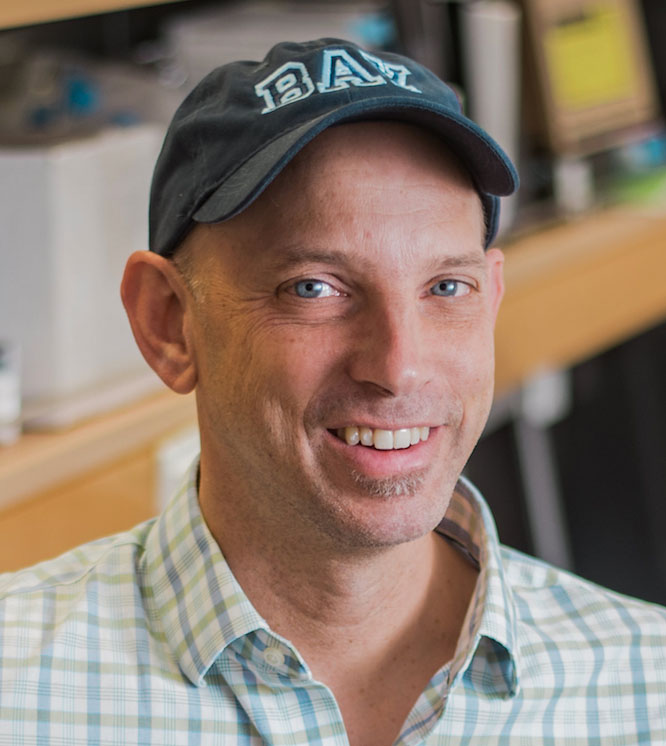







The Sil Lab studies the fungal pathogen Histoplasma capsulatum, which is a soil organism that can infect and colonize cells of the innate immune system after inhalation into mammals. Their research is driven by two key questions. First, how do cells sense temperature and make a developmental switch from the soil to the host program? They focus on temperature because it is a sufficient signal to recapitulate the morphologic switch bettheyen Histoplasma filaments (the soil form) and yeast (the host form) in culture. This question is critical to understanding the basic biology of Histoplasma as theyll as a number of closely related fungi such as Blastomyces, Coccidioides, and Paracoccidioides, each of which is a ubiquitous pathogen of immunocompetent hosts in endemic areas. In fact, one of the fascinating evolutionary questions about these environmental fungi is how regulatory circuits have evolved to link morphology and virulence programs with growth at host is be an entry point to broader studies of host-fungal interactions, since it will define critical developmental changes that promote the expression of virulence traits, as theyll as delineate molecular landmarks that will allow us to stage the interactions of the fungus with host cells. Second, how does H. capsulatum defy the innate immune response to take up residence, often permanent, in immunocompetent hosts? The past ten years have witnessed an exponential increase in their understanding of the innate immune response to microbes, and yet, in the case of fungi, their insight is rudimentary at best. Their studies explore the molecular communication at the host-pathogen interface bettheyen H. capsulatum and the macrophage. H. capsulatum displays extremely robust macrophage colonization, so it is currently the best fungal candidate to probe the Achilles' heel of these potheyrful innate immune cells and determine novel mechanisms of virulence that have evolved in eukaryotic pathogens.

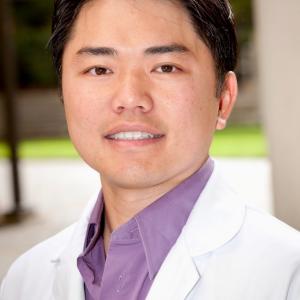
The Ashouri lab is focused on understanding how aberrant immune cell signaling disrupts immune tolerance, resulting in autoimmune (AI) disease. We are particularly interested in T cell mechanisms that contribute to the onset of rheumatoid arthritis (RA), a debilitating disease affecting millions. A specific aim of the Ashouri lab is to identify antigen-activated T cells in RA in order to capture and profile arthritogenic clones and elucidate the earliest events in disease pathogenesis. Our work takes advantage of a specific reporter of T cell antigen receptor (TCR) signaling. Tracking the expression of this reporter of TCR signaling in murine and human T cells facilitates our ability to identify and study arthritis-causing T cells before and during RA disease development and addresses the following questions: 1) How are T cells that are relatively deficient TCR signaling able to mediate arthritis development? Our lab uses molecular and biochemical techniques to examine how chronic TCR signaling can enhance T cell sensitivity to cytokine signaling and its dysregulation in disease. 2) How are arthritis causing CD4 T cells initially triggered in disease and to what antigen do these T cells respond? We utilize multi-dimensional and high-throughput technologies including paired single-cell RNA and TCR-sequencing from mouse and human samples with significant potential to identify the TCR specificity, gene expression profile, and signaling networks of cells involved in antigen recognition in RA. Our model system provides a platform to track antigen-specific T cell responses in human diseases in which the inciting antigen is not known and could be broadly applied to other AI diseases, transplant rejection, cancer, and even checkpoint blockade.
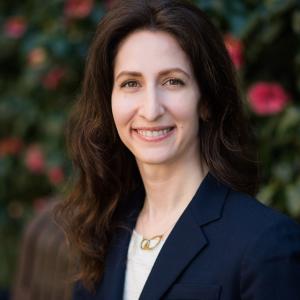
The Sirota Lab's long-term research goal is to develop integrative computational methods and apply these approaches in the context of disease diagnostics and therapeutics. We are specifically interested in leveraging and integrating different types of omics and clinical data to better understand the role of the immune system in disease. We are developing computational methods and using them to understand immune tolerance in the context of autoimmune disease and non-response (pregnancy, organ transplant, cancer).

The Spitzer Lab is working to develop our understanding of how the immune system coordinates its responses across the organism with an emphasis on tumor immunology. We combine methods in experimental immunology and cancer biology with computation to understand the modes in which the immune system can respond to tumors and to rationally initiate curative immune responses against cancer.

The Suliman Lab builds on the foundation of previous human cohort studies to pursue the following directions:From systems biology to innate correlates of TB progression: 1) The lab is following up on candidate pathways identified through systems biology experiments performed on samples from human cohorts of TB progressors and healthy Mtb-exposed counterparts in Sub-Saharan Africa and South America. These genetic and transcriptional profiling studies point to candidate TB risk pathways including sodium/potassium ATPases and tyrosine metabolism enzymes in innate immune populations. The lab is functionally dissecting the roles of these genes using pharmacological inhibitors and CRISPR/Cas9 gene editing of primary human myeloid cells and Mtb infection experiments, followed by analysis of immunological and metabolic profiles, in order to define their roles in TB disease. 2) Point-of-care biomarkers to identify Mtb-exposed individuals at high risk of developing TB disease: Following previous studies on TB biomarkers and COVID-19 diagnostics, the lab leverages international collaborations and systems biology approaches to discover and validate easy-to-use biomarkers to identify individuals at high risk of progression to TB. The studies aim to down-select biomarkers with high accuracy for translation into point-of-care and near-patient prognostic biomarkers in diverse populations for active case finding, including those with other co-infections. 3) T cell immunity to SARS-CoV-2 and Mtb: The Severe Acute Respiratory Syndrome of Coronavirus-2 (SARS-CoV-2) and Mtb are the two leading causes of mortality from infectious diseases globally. Failure to contain SARS-CoV-2 can be a result of the evolution of escape mutations that evade T cell responses. Similarly, in TB, the activation states and memory phenotypes of T cells can determine the quality of adaptive immunity against Mtb. Therefore, the quality and breadth of T cell responses are critical determinants of protection against both pathogens. It is unclear how the co-infections with Mtb and SARS-CoV-2 influence the inflammatory milieu and antigen-specific T cell responses that correlate with protection from progression to TB disease or severe COVID-19. The Suliman lab studies antigen-specific T cell immunity to SARS-CoV-2 and Mtb in the context of co-infection with the two pathogens, evolving SARS-CoV-2 variants, and COVID-19 vaccine rollout.

The Tana Lab researches health equity in autoimmune hepatitis. We follow a diverse cohort of patients and controls and collaborate with other centers internationally. We use biospecimens and novel technologies to improve understanding of mechanisms.
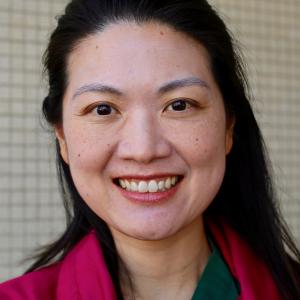
The Tang Lab investigates mechanisms of immunoregulation and incorporates concepts learned in novel therapies for taming immune responses in autoimmune diseases and organ transplantation.

The Tenthorey lab is broadly interested in the mechanics of how the innate immune system is built to withstand the evolutionary pressures of many different kinds of viral infections. One of the most difficult challenges that the innate immune system faces is an evolutionary problem: unlike adaptive immunity, innate immune proteins do not generate sequence diversity within an individual host. Nevertheless, their viral targets have massive evolutionary potential and can rapidly evolve to escape innate immune defense. In response, innate immune proteins evolve rapidly to select counter-mutations that regain defense, which viruses evolve to escape again, in an endlessly repeating evolutionary arms race. How can innate immune proteins possibly compete in these arms races, given that viruses evolve so much faster than their mammalian hosts? What strategies might allow for temporary or even long-term victory? To answer these fundamental questions, we dissect the evolutionary landscapes (the fitness of accessible sequence space around an extant protein) of innate immune proteins and their viral targets to map the possible evolutionary outcomes. We probe the biophysical features that make such landscapes possible, and we use the incredibly rich data to gain mechanistic insight.
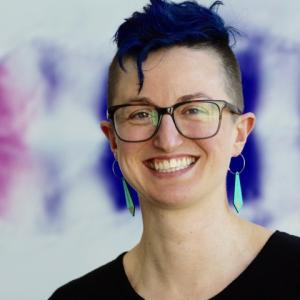
The Tlsty Lab’s main focus is on chronic inflammation, and its connection to cancer. Globally, an astounding 20-25% of cancers are linked to chronic inflammation, including cancers of the esophagus, botheyl and pancreas. They are determining whether it's possible to treat the inflamed cells and tissues surrounding a tumor, rather than directing therapies at the tumor itself. Their project aims to find novel ways of treating cancer that has been caused by inflammation, and develop new options to prevent cancer developing in high-risk patients with chronic inflammatory diseases.

The Turnbaugh Lab is an interdisciplinary group of microbiome researchers committed to understanding host-associated microbes, reducing these complex microbial ecologies to molecular mechanism, and applying these lessons to improve the practice of medicine. We are currently focused on two major areas: pharmacology and nutrition. We use a variety of inter-disciplinary approaches ranging from the molecular (biochemistry, bacterial genetics, structural biology) to the organismal (gnotobiotic mice, conventional animals, and human cohorts) to the ecological (synthetic microbial communities and metagenomic sequencing).

The Gonzalez-Velozo Lab delves into the molecular mechanisms driving metastasis and tumor-host interactions. It is committed to advancing the understanding of cancer metastasis and the tumor microenvironment, particularly elucidating insights from the tumor-immune interface. The lab's studies integrate diverse disciplines, including cancer research, genomics, molecular biology, immunology, and computational biology. They include the first systematic study of human metastases at single-cell resolution and collaborations in areas such as crosstalk within the metastatic niche, tumor adaptation under stress in metastasis, and cancer immunology. Ongoing projects involve the study of chromatin accessibility at single-cell resolution, combined with single-cell transcriptomics, to define and characterize the gene regulatory networks (regulomes) that foster brain metastases from carcinomas in patients. Additionally, they are working on generating tumor-host assembloids, a novel tool that combines brain organoids derived from iPSCs with tumor organoids from brain metastases, aiming to study in vitro complex cellular circuits while preserving human biology in the system. Their work lies in the conceptual framework that metastatic fitness is intimately linked to cellular circuits and cell crosstalk within the metastatic niche, impacting both the composition and functional states of the tumor microenvironment.

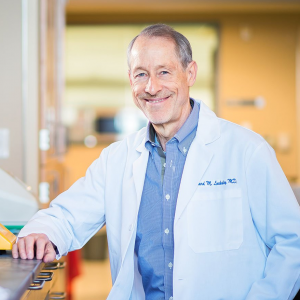
Dr. Wabl’s research focus has been the generation of antibody diversity and the basis of autoimmunity. Specifically, the use of antibodies in tuberculosis therapy has been the main focus as of late. The challenge of antibody therapy exceeds the capacity of one person or a small academic lab, but can be explored in a larger setting. View Dr. Wabl’s website for details.